
Embark on a journey through the Roof Estimate Comparison Guide, where we delve into the world of roofing materials, cost factors, labor comparisons, and maintenance considerations. Get ready to explore all you need to know before making a decision about your roof.
Roofing Materials Comparison
When it comes to roofing materials, there are several options to consider, each with its own set of advantages and disadvantages. Understanding the differences between materials can help you make an informed decision when comparing roof estimates.
Asphalt Shingles
Asphalt shingles are one of the most common roofing materials due to their affordability and ease of installation. They come in a variety of colors and styles, making them a versatile choice for many homeowners. However, asphalt shingles have a shorter lifespan compared to other materials and may require more frequent maintenance.
Metal Roofing
Metal roofing is known for its durability and longevity, often lasting 50 years or more. While metal roofs can be more expensive upfront, they require minimal maintenance and are energy-efficient. Additionally, metal roofs are resistant to fire, mildew, and rot.
Clay Tiles
Clay tiles offer a classic and elegant look to a home and are known for their longevity, lasting up to 100 years with proper maintenance. However, clay tiles are heavier than other materials, requiring a sturdy roof structure for support.
They can also be more expensive and may be prone to cracking in extreme weather conditions.
Wood Shingles
Wood shingles provide a natural and rustic appearance to a home but may require more maintenance to prevent rot, mold, and insect infestations. While wood shingles are biodegradable and environmentally friendly, they are not as durable as other materials and may have a shorter lifespan.
Slate Roofing
Slate roofing is highly durable and can last over 100 years when properly maintained. It is fire-resistant, environmentally friendly, and adds a luxurious aesthetic to a home. However, slate roofing is one of the most expensive options and may be more challenging to install due to its weight.
Comparison Table
| Roofing Material | Durability | Cost | Maintenance |
|---|---|---|---|
| Asphalt Shingles | 15-30 years | Affordable | Regular maintenance |
| Metal Roofing | 50+ years | Higher upfront cost | Low maintenance |
| Clay Tiles | Up to 100 years | Expensive | Moderate maintenance |
| Wood Shingles | 20-40 years | Moderate cost | Regular maintenance |
| Slate Roofing | 100+ years | High cost | Low maintenance |
Cost Factors Analysis
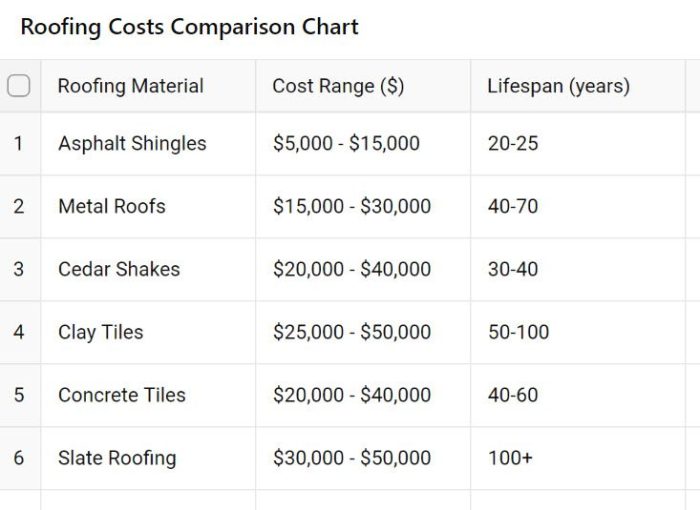
When it comes to estimating the cost of a roofing project, several key factors come into play that can significantly impact the overall price. Understanding these factors is crucial for homeowners looking to budget effectively for their roof replacement or repair.Factors such as roof size, pitch, complexity, and materials all play a role in determining the cost of a roofing project.
Let's dive into each of these factors to see how they influence estimates.
Roof Size
The size of the roof is one of the most significant cost factors. A larger roof will require more materials and labor, leading to a higher overall cost. For example, a 2,000 square foot roof will cost more to replace than a 1,000 square foot roof.
Roof Pitch
The pitch or slope of the roof also affects the cost of the project. A steeper roof pitch requires more safety precautions and specialized equipment, which can increase the labor costs. Additionally, steep roofs may require additional materials for proper installation, further impacting the overall cost.
Roof Complexity
The complexity of the roof design can also impact the cost of the project. A roof with multiple angles, valleys, dormers, or skylights will require more time and effort to install, leading to higher labor costs. Complex roofs may also require custom flashing or additional waterproofing measures, adding to the overall cost.
Roofing Materials
The type of roofing materials chosen for the project will have a significant impact on the cost. High-end materials like slate or metal roofing will cost more upfront but may offer long-term savings in terms of durability and energy efficiency.
On the other hand, more affordable options like asphalt shingles are popular for their cost-effectiveness, but may require more frequent replacements over time.By considering these key cost factors, homeowners can better understand how various elements influence the overall estimate for their roofing project.
It's essential to work with a reputable roofing contractor to get an accurate quote based on these factors and ensure a successful and cost-effective roofing project.
Labor and Installation Comparison
When it comes to roofing projects, labor costs and installation processes play a crucial role in determining the overall expenses
Skill Level for Installing Various Roofing Materials
Different roofing materials require different levels of skill for installation. For example, asphalt shingles are relatively easy to install and require basic roofing knowledge. On the other hand, materials like metal roofing or slate tiles may require more specialized skills and experience due to their unique installation requirements.
Variation in Labor Costs Based on Roof Complexity
The complexity of the roof design can significantly impact labor costs. A simple gable roof with a straightforward design will generally have lower labor costs compared to a more intricate roof design with multiple angles, hips, valleys, and dormers. The more complex the roof, the more time and labor will be required for installation, leading to higher costs.
Contrast in Labor Costs for Different Types of Roofs
Asphalt Shingles
Generally have lower labor costs due to their ease of installation.
Metal Roofing
Can have higher labor costs due to the precision required for installation and handling of the material.
Slate Tiles
Tend to have higher labor costs due to the delicate nature of the material and the expertise needed for proper installation.
Clay Tiles
Labor costs can vary depending on the size and weight of the tiles, as well as the complexity of the roof design.
Warranty and Maintenance Considerations
When considering roofing options, it's crucial to pay attention to the warranties offered by roofing companies. Warranties can provide peace of mind and protection against potential issues that may arise in the future. Additionally, understanding the maintenance requirements for different types of roofs is essential for ensuring their longevity and minimizing long-term costs.
Warranty Comparison
- Asphalt Shingles: Most asphalt shingle manufacturers offer warranties ranging from 20 to 30 years. Some premium shingles may even come with lifetime warranties. It's important to carefully read and understand the terms and conditions of the warranty to know what is covered and for how long.
- Metal Roofing: Metal roofs typically come with warranties that range from 30 to 50 years. These warranties often cover both the paint finish and the structural integrity of the metal panels. Some manufacturers may also offer warranties against specific types of damage, such as hail or corrosion.
- Tile Roofing: Tile roofs can have warranties that last for 50 years or more. These warranties usually cover the structural integrity of the tiles and may also include protection against color fading or algae growth. It's important to follow the manufacturer's guidelines for maintenance to ensure the warranty remains valid.
Maintenance Considerations
- Asphalt Shingles: Regular maintenance for asphalt shingle roofs includes periodic inspections, cleaning of debris, and replacing damaged shingles. Proper maintenance can help extend the lifespan of the roof and prevent costly repairs down the line.
- Metal Roofing: Metal roofs are relatively low maintenance, requiring occasional inspections and cleaning to remove dirt and debris. It's important to check for any scratches or damage to the paint finish and address them promptly to prevent rust or corrosion.
- Tile Roofing: Tile roofs are durable and long-lasting but require maintenance to ensure they remain in good condition. This includes replacing broken or cracked tiles, cleaning moss or algae growth, and ensuring proper drainage to prevent water damage.
Outcome Summary
As we wrap up our discussion on the Roof Estimate Comparison Guide, remember that a well-informed choice can save you time, money, and hassle in the long run. Use the insights gained here to make the best decision for your roofing needs.
Essential Questionnaire
What are the main factors affecting roof estimates?
The main factors include roof size, pitch, complexity, and the materials used in the roofing project.
How do warranties impact the choice of roofing materials?
Warranties play a crucial role in ensuring long-term quality and protection, influencing the decision-making process for choosing roofing materials.
What types of roofs require higher labor costs?
Roofs with complex designs or materials that require specialized skills for installation generally incur higher labor costs.